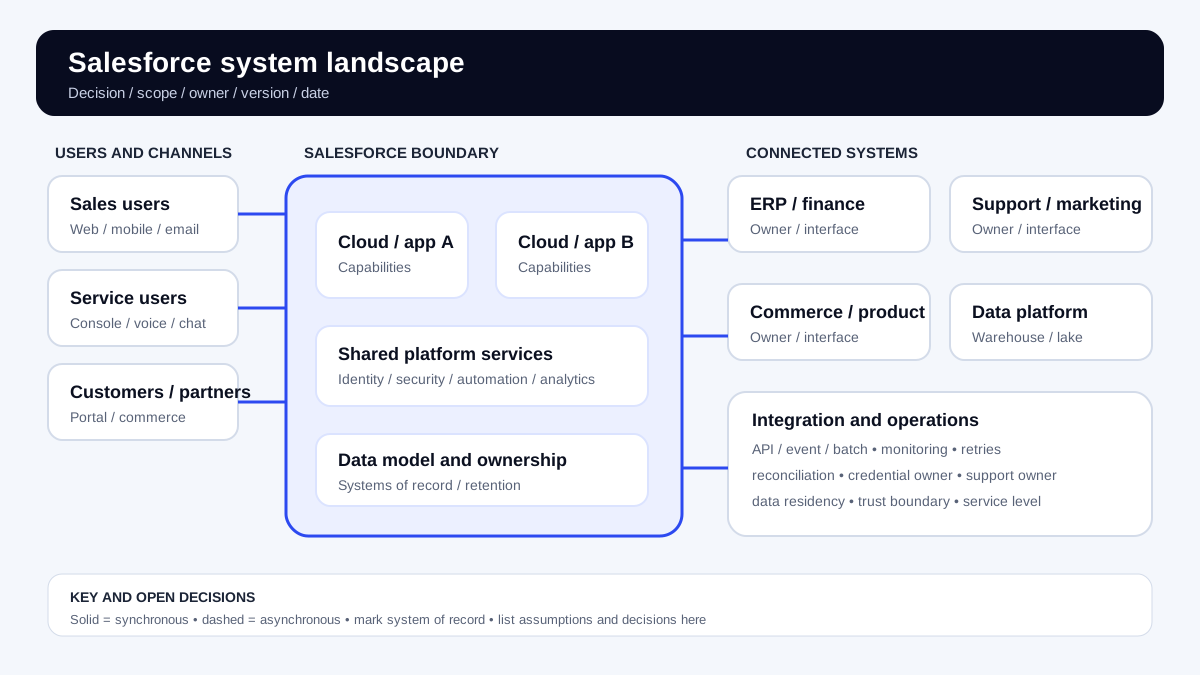
System landscape
Show users, channels, Salesforce Clouds, connected systems, data platforms, and ownership boundaries.
A useful Salesforce architecture diagram answers one decision at a time. It names the systems, data flow, interfaces, trust boundaries, and owners without hiding the design under product logos. ForceFolks provides three editable SVG starting points for a system landscape, an integration flow, and an Agentforce plus Data Cloud solution.
Salesforce Architects advises teams to keep a diagram concise, give it a clear title and description, read it from left to right and top to bottom, and limit its scope to the message it must communicate. The official diagram guide also separates system landscapes, solution architecture, roadmaps, process flows, and data models because one drawing should not try to do every job.
The ForceFolks templates use that decision-first approach. They are original planning aids with generic shapes. They are not official Salesforce templates. Keep the official Salesforce reference architecture gallery beside them when you need product-specific reference material.
Each SVG opens in a browser and can be edited in compatible diagram or design tools.
Show users, channels, Salesforce Clouds, connected systems, data platforms, and ownership boundaries.
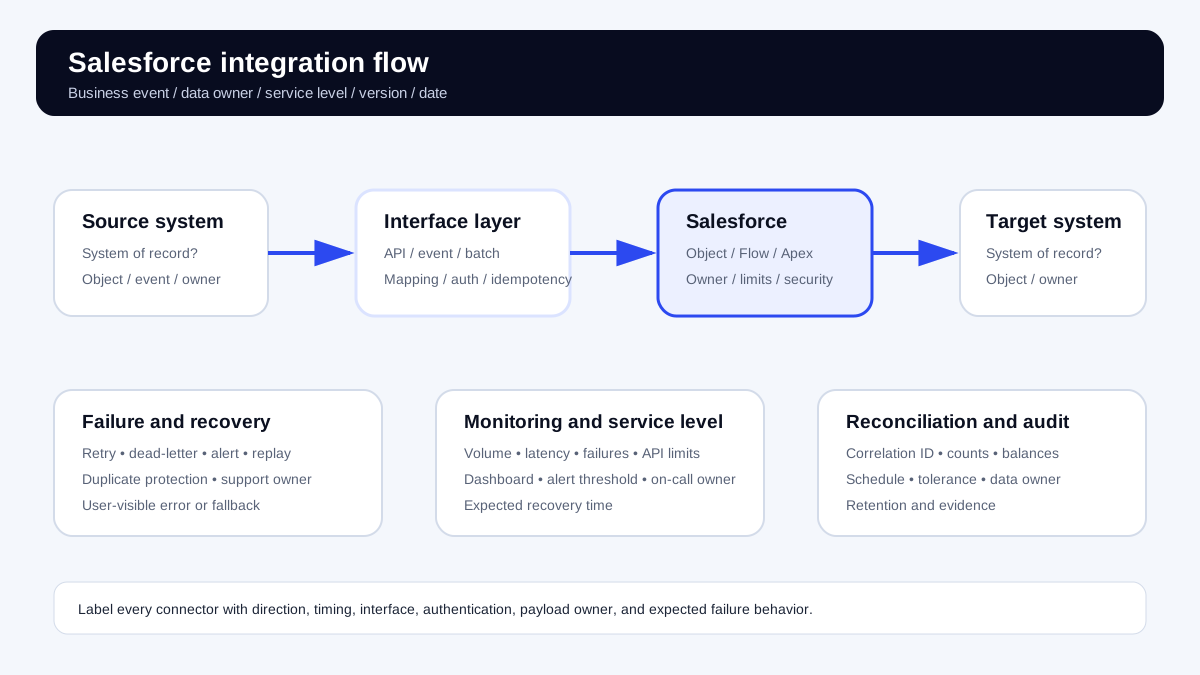
Document source of truth, direction, API or event path, timing, retries, monitoring, and reconciliation.
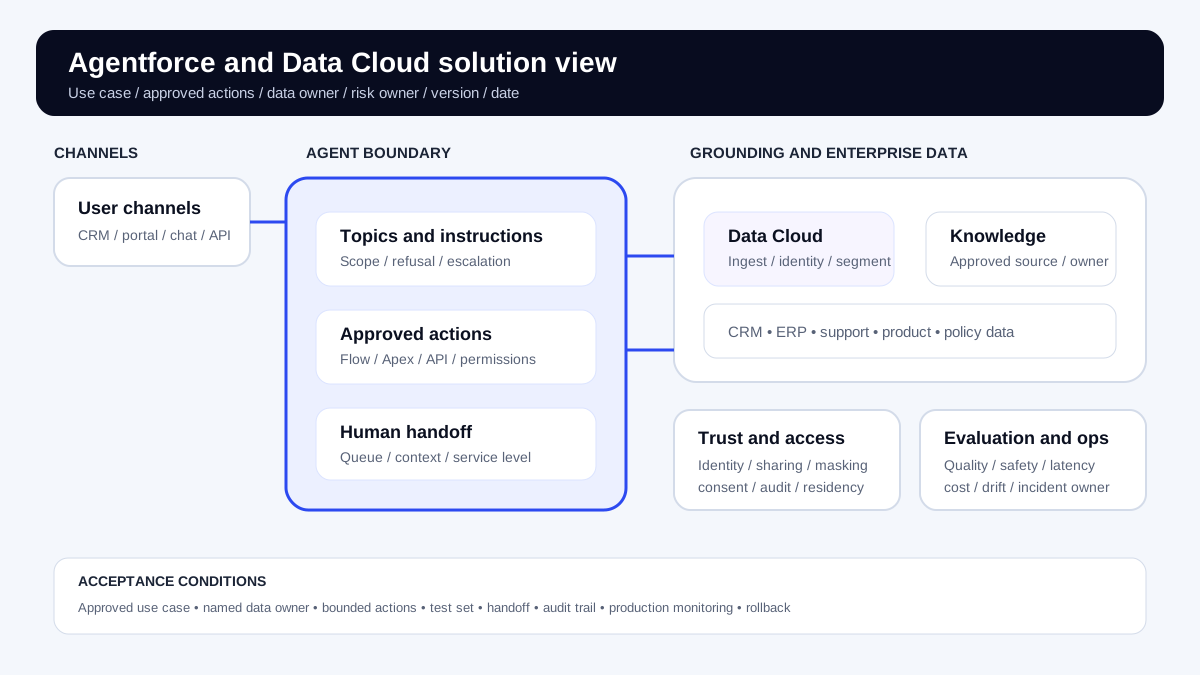
Map channels, agent topics and actions, grounding data, identity, guardrails, human handoff, and observability.
| Diagram type | Use it to answer | Include | Leave out |
|---|---|---|---|
| System landscape | What systems and Salesforce products are in scope? | Major systems, users, boundaries, owners | Field-level mappings and every API call |
| Solution architecture | How will this business capability work? | Components, data, security, integrations, decisions | Unrelated enterprise systems |
| Integration flow | How does information move and recover? | Direction, timing, interface, errors, reconciliation | Decorative product catalogues |
| Agentforce and Data Cloud | What grounds the agent and what can it do? | Channels, topics, actions, data, trust, handoff, monitoring | Unapproved future use cases |
A Salesforce architecture diagram shows the systems, Salesforce products, data, users, interfaces, and ownership boundaries that make up a solution. Its scope should match the decision that the audience needs to make.
Start with a system landscape when stakeholders need a shared view of products and connected systems. Use a solution architecture diagram for a specific implementation and an integration flow when direction, timing, errors, and ownership matter.
No. ForceFolks created these editable SVG planning templates. They follow useful public diagram principles from Salesforce Architects, but they are not official Salesforce assets and do not use official product logos.
Yes. Open an SVG in a compatible design tool, diagram tool, browser, or text editor. Replace the placeholder labels, add your systems, and keep a version in source control or your architecture repository.
ForceFolks can turn your system landscape and business requirements into an implementation-ready Salesforce architecture.